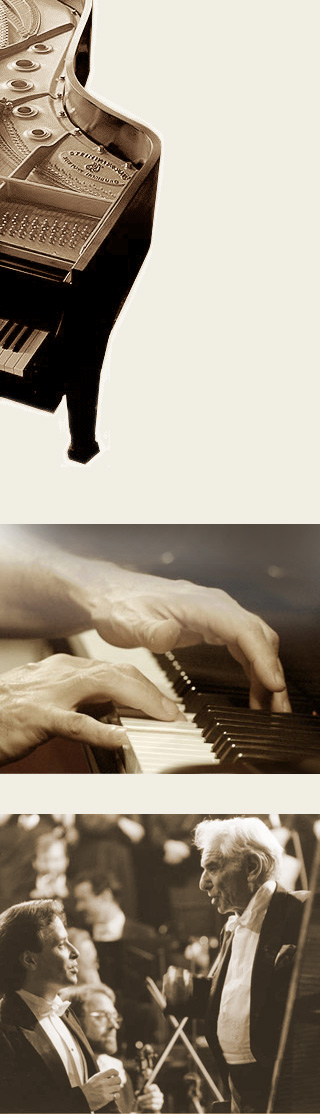
Er will gefordert sein, will sich selbst fordern, seine Grenzen erkennen. Nur jemand, der weiss, wieweit er gehen kann, hat die Sicherheit: Die des Denkens und die des Spielens.
BIOGRAFIE
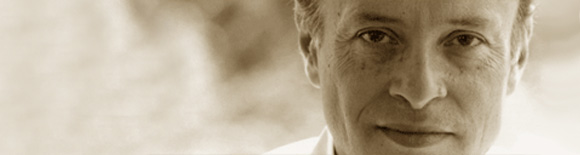
Homero Francesch (Uruguay/Schweiz) wurde in Montevideo geboren. Zunächst erhielt er Klavierunterricht bei Santiago Baranda Reyes in Uruguay. Stipendiat des Deutschen Akademischen Austauschdienstes. Studium in München bei Hugo Steurer und Ludwig Hoffmann.
Konzerte in allen europäischen Hauptstädten, in Kanada, Japan, Australien und den USA wie auch in Lateinamerika.
Er nahm für die Deutsche Grammophon Werke von Bach, Bartok, Henze, Mendellsohn, Mozart, Ravel, Schumann, Strawinsky und Tschaikowsky auf. Ausserdem für Tudor Scarlatti, Ravel, Chopin, Mozart, Reinecke und für Kontrapunkt alle Sonaten und sämtliche Klavierkonzerte von Mozart. 1978 wurde er mit dem Deutschen Schallplattenpreis ausgezeichnet.
Zahlreiche Musikproduktionen beim Fernsehen unter anderem das G-dur Klavierkonzert von Ravel, 1973 ausgezeichnet mit dem Prix Italia sowie die Chor-Fantasie von Beethoven unter Leonard Bernstein mit den Wiener Philharmonikern, Hans Werner Henze „Tristan“ unter der Leitung des Komponisten mit dem WDR Rundfunk-Symphonie-Orchester Köln, Haydn D-dur Konzert und Mendellsohn d-moll Konzert mit Sir Neville Marriner mit The Academy of St. Martin in the Fields und auch originelle Soloprogramme von Mozart, Ravel, Rachmaninow, Albeniz, de Falla, Villa-Lobos, Alberto Ginastera.
Er wurde von den renommiertesten Orchestern der Welt als Solist verpflichtet: Berliner Philharmoniker, Münchner Philharmoniker, Sächsische Staatskapelle Dresden, alle Radio-Sinfonie-Orchester Deutschlands, Wiener Philharmoniker, Orchestre National de France, Koninklijk Concertgebouworkest, London Symphony Orchestra, New York Philharmonic, Cleveland Orchestra, Royal Liverpool Philharmonic, Philharmonie Warschau, Orchestra Sinfonica Nazionale della RAI Torino, Tonhalle Orchester Zürich, usw.
Er spielte mit Leonard Bernstein, Kurt Masur, Sir Colin Davis, Gary Bertini, Herbert Blomstedt, Riccardo Chailly, Eliahu Inbal, Neeme Järvi, Zdenek Macal, Rafael Frühbeck de Burgos, Marek Janowski, Michael Gielen, Witold Rowicki, Karl Richter, Hiroshi Wakasugi, Sir Neville Marriner, Sir Charles Mackerras, Charles Dutoit und vielen anderen.
Zahlreiche Festivals haben ihn eingeladen: Berliner Festwochen, Schleswig-Holstein Musik Festival, Beethovenfeste Bonn, Wiener Festwochen, Rheingau Musik Festival, Klavier-Festival Ruhr, Prager Frühling, Salzburger Festspiele, George Enescu Festival Bukarest, Cervantino Festival Mexico, Schubertiade, Aix en Provence, Kasseler Musiktage, Savonlinna Finnland, Chopin Festival Duzniki/Polen, Bach Festival London mit Bernstein etc.
Homero Francesch hatte eine Professur an der Zürcher Hochschule der Künste (ZHdK) und unterrichtete dort während 33 Jahren eine Solistenklasse. Von 2004 bis 2009 war er künstlerischer Leiter der Sommer-Akademie Lenk in der Schweiz. Er ist Jurymitglied bei zahlreichen internationalen Klavierwettbewerben. Von 2006 bis 2015 steht er dem Viersener Musiksommer als künstlerischer Leiter vor.
Konzerte in allen europäischen Hauptstädten, in Kanada, Japan, Australien und den USA wie auch in Lateinamerika.
Er nahm für die Deutsche Grammophon Werke von Bach, Bartok, Henze, Mendellsohn, Mozart, Ravel, Schumann, Strawinsky und Tschaikowsky auf. Ausserdem für Tudor Scarlatti, Ravel, Chopin, Mozart, Reinecke und für Kontrapunkt alle Sonaten und sämtliche Klavierkonzerte von Mozart. 1978 wurde er mit dem Deutschen Schallplattenpreis ausgezeichnet.
Zahlreiche Musikproduktionen beim Fernsehen unter anderem das G-dur Klavierkonzert von Ravel, 1973 ausgezeichnet mit dem Prix Italia sowie die Chor-Fantasie von Beethoven unter Leonard Bernstein mit den Wiener Philharmonikern, Hans Werner Henze „Tristan“ unter der Leitung des Komponisten mit dem WDR Rundfunk-Symphonie-Orchester Köln, Haydn D-dur Konzert und Mendellsohn d-moll Konzert mit Sir Neville Marriner mit The Academy of St. Martin in the Fields und auch originelle Soloprogramme von Mozart, Ravel, Rachmaninow, Albeniz, de Falla, Villa-Lobos, Alberto Ginastera.
Er wurde von den renommiertesten Orchestern der Welt als Solist verpflichtet: Berliner Philharmoniker, Münchner Philharmoniker, Sächsische Staatskapelle Dresden, alle Radio-Sinfonie-Orchester Deutschlands, Wiener Philharmoniker, Orchestre National de France, Koninklijk Concertgebouworkest, London Symphony Orchestra, New York Philharmonic, Cleveland Orchestra, Royal Liverpool Philharmonic, Philharmonie Warschau, Orchestra Sinfonica Nazionale della RAI Torino, Tonhalle Orchester Zürich, usw.
Er spielte mit Leonard Bernstein, Kurt Masur, Sir Colin Davis, Gary Bertini, Herbert Blomstedt, Riccardo Chailly, Eliahu Inbal, Neeme Järvi, Zdenek Macal, Rafael Frühbeck de Burgos, Marek Janowski, Michael Gielen, Witold Rowicki, Karl Richter, Hiroshi Wakasugi, Sir Neville Marriner, Sir Charles Mackerras, Charles Dutoit und vielen anderen.
Zahlreiche Festivals haben ihn eingeladen: Berliner Festwochen, Schleswig-Holstein Musik Festival, Beethovenfeste Bonn, Wiener Festwochen, Rheingau Musik Festival, Klavier-Festival Ruhr, Prager Frühling, Salzburger Festspiele, George Enescu Festival Bukarest, Cervantino Festival Mexico, Schubertiade, Aix en Provence, Kasseler Musiktage, Savonlinna Finnland, Chopin Festival Duzniki/Polen, Bach Festival London mit Bernstein etc.
Homero Francesch hatte eine Professur an der Zürcher Hochschule der Künste (ZHdK) und unterrichtete dort während 33 Jahren eine Solistenklasse. Von 2004 bis 2009 war er künstlerischer Leiter der Sommer-Akademie Lenk in der Schweiz. Er ist Jurymitglied bei zahlreichen internationalen Klavierwettbewerben. Von 2006 bis 2015 steht er dem Viersener Musiksommer als künstlerischer Leiter vor.